
Tile Size Guide: Choosing the Right Tile Size for Each Room - Blog
Tiles play a major role in defining the look and functionality of a space. While color, pattern, and material often get the most attention, tile size is equally important when designing or renovating a home. The size of a tile can influence how large or small a room appears, how easy the surface is to maintain, and how visually appealing the final result looks.
Selecting the right tile size for each room ensures both practicality and aesthetic balance. Whether you are designing a modern living room, a functional kitchen, or a relaxing bathroom, understanding the right proportions can make a significant difference.
In this comprehensive guide, we’ll explore how to choose the best tile dimensions for different rooms and how trusted brands like Lakshmi Ceramics help homeowners find the perfect match for their interiors.
Why Tile Size Matters in Interior Design
Choosing the correct tile dimensions goes beyond simple appearance. It directly impacts the visual harmony and usability of a room.
1. Enhances the Perception of Space
Larger tiles often create fewer grout lines, which makes floors appear more seamless and spacious. This is why many designers recommend large-format tiles for living rooms or open-plan areas.
Smaller tiles, on the other hand, can add texture and detail, making them suitable for compact spaces or decorative sections.
2. Affects Maintenance and Cleaning
Tiles with fewer grout joints are generally easier to clean. Large-format tiles reduce grout lines, which means less dirt accumulation and simpler maintenance.
3. Influences Installation Costs
Tile installation cost may vary depending on the size and layout. Larger tiles require precise leveling and skilled installation, while smaller tiles can take more time due to the increased number of pieces.
Standard Tile Sizes Available in the Market
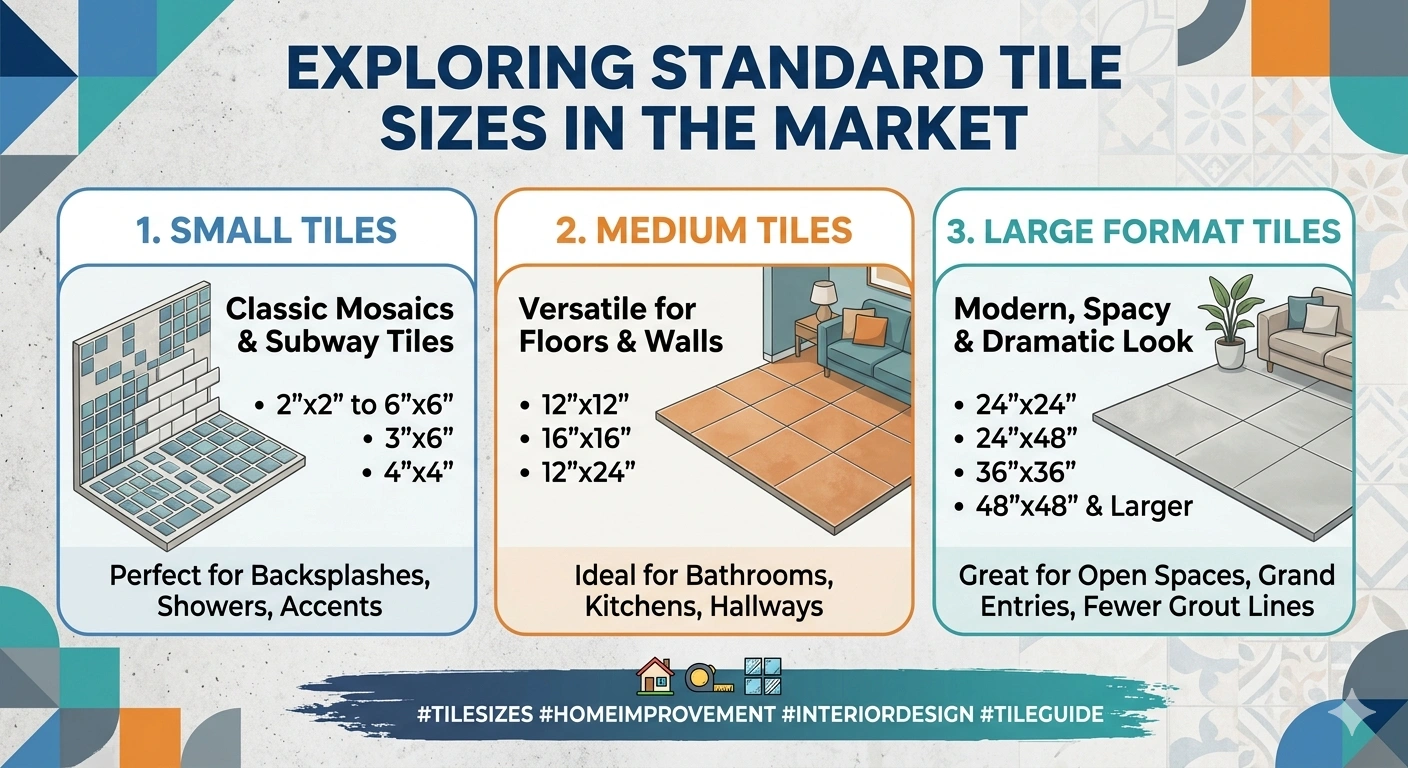
Understanding common tile dimensions helps homeowners make informed decisions.
Small Tiles
Small tiles are typically used for decorative surfaces or areas requiring detailed design work.
Common sizes include:
- 100×100 mm
- 200×200 mm
- 300×300 mm
These are often used in bathrooms, backsplashes, and mosaic patterns.
Medium Tiles
Medium-sized tiles offer a balance between functionality and aesthetics.
Popular sizes include:
- 300×300 mm
- 400×400 mm
- 600×600 mm
These are widely used in kitchens, bedrooms, and balconies.
Large Format Tiles
Large tiles are increasingly popular in modern interiors.
Common options include:
- 600×600 mm
- 800×800 mm
- 1200×600 mm
- 1200×1200 mm
They provide a sleek and luxurious appearance with minimal grout lines.
Tile Size Guide for Different Rooms
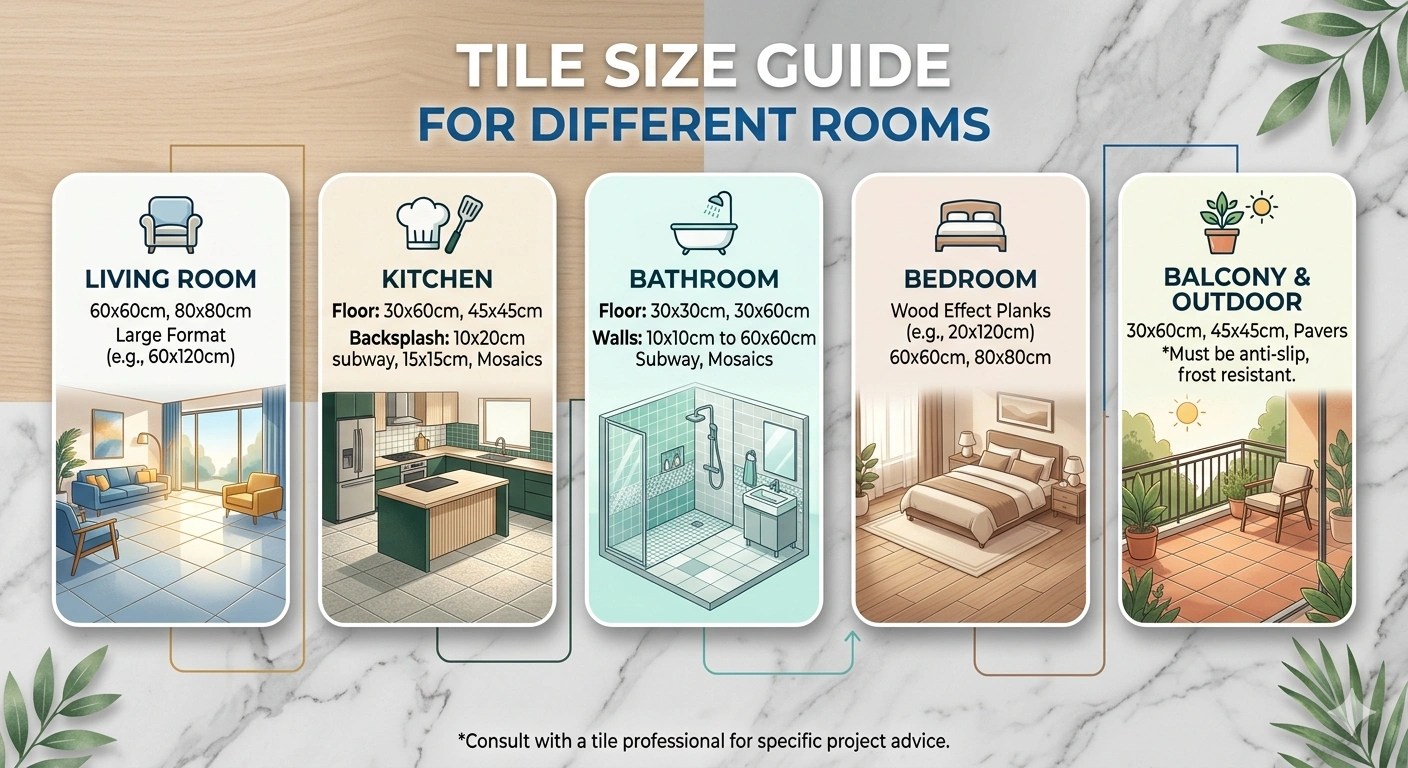
Every room in a home has different requirements, which is why selecting the correct tile dimensions is essential.
Living Room
Living rooms are often the largest areas in a home, which makes them ideal for larger tile formats. Large tiles help create a smooth and continuous surface that enhances the sense of space.
Recommended sizes:
- 600×600 mm
- 800×800 mm
- 1200×600 mm
These tiles reduce grout lines and create a modern appearance. They also reflect light effectively, which makes the room appear brighter.
Using larger tiles also simplifies the design. When there are fewer grout joints, the floor looks more seamless and elegant. For open-plan living areas, large tiles help maintain visual continuity across different zones.
If the living room is relatively small, medium-sized tiles can also work well. Proper layout planning ensures that the tiles fit the space without excessive cutting.
Kitchen
Kitchens tiles that balance aesthetics with durability. Medium-sized tiles are often the most practical choice because they are easier to install in areas with cabinets and appliances.
Recommended sizes include:
- 300×300 mm
- 600×600 mm
These tiles provide enough durability while still being easy to install around kitchen fixtures.
For kitchen walls and backsplashes, smaller tiles are often preferred. Subway tiles and mosaic designs create visual interest and complement kitchen cabinets.
The correct tile size in kitchens should also consider safety. Slip-resistant surfaces are important for kitchen floors, especially in areas where spills may occur.
Bathroom
Bathrooms tile selection because the space usually includes both wet and dry areas. Different tile sizes are often used for floors, walls, and shower areas.
Small tiles work well for shower floors because they provide better grip and slip resistance. Mosaic tiles are commonly used in these areas.
Popular choices include:
- Mosaic tiles
- 300×300 mm tiles
- 400×400 mm tiles
These tiles create a balanced look without overwhelming the space.
For bathroom floors, medium tiles are usually recommended. They provide durability and are easier to install around drains and fixtures.
Combining different tile sizes can also create attractive design effects. For example, large wall tiles paired with small mosaic floor tiles can produce a visually appealing contrast.
Bedroom
Bedrooms benefit from flooring that creates a calm and comfortable atmosphere. Larger tiles are often used to achieve this effect.
Common sizes include:
- 600×600 mm
- 800×800 mm
Wood-look tiles are particularly popular in bedrooms. These tiles replicate the appearance of natural wood while offering the durability of ceramic or porcelain.
When selecting a tile size for bedrooms, it is important to consider the layout of the room. Proper placement helps ensure that tiles align well with walls and furniture.
Balcony and Outdoor Areas
Outdoor spaces such as balconies, patios, and terraces require tiles that are both durable and slip resistant. Larger outdoor tiles are often preferred because they create a more open and elegant appearance.
Suitable sizes include:
- 300×300 mm
- 400×400 mm
- 600×600 mm
These tiles provide good coverage and reduce the number of grout joints exposed to weather conditions.
Outdoor tiles must also be strong enough to withstand temperature changes, moisture, and heavy foot traffic. Choosing the right tile dimensions helps maintain both durability and visual appeal.
Tips for Choosing the Right Tile Size
Selecting the correct tile dimensions requires careful planning. Here are some practical tips to help you make the right choice.
Consider the Room Dimensions
Large rooms typically look better with larger tiles because they reduce visual clutter. Smaller rooms may benefit from medium tiles to maintain proportion.
Think About Tile Layout Patterns
The way tiles are arranged can affect the visual flow of the room. Patterns like diagonal layouts or staggered designs can make a space appear larger.
Balance Style and Functionality
While aesthetics are important, practical considerations such as cleaning, durability, and slip resistance should not be overlooked.
Match Tiles with Interior Design
Choose tile dimensions that complement furniture placement, wall colors, and overall design themes.
Common Mistakes to Avoid When Selecting Tile Size
Even experienced homeowners sometimes make mistakes when choosing tiles. Avoid these common issues:
Choosing Oversized Tiles for Small Rooms
Very large tiles in extremely small spaces may lead to excessive cutting and waste.
Ignoring Grout Width
Grout spacing affects the final look of the floor. Improper grout lines can disrupt the visual balance of the room.
Overlooking Installation Requirements
Large tiles require perfectly level surfaces and skilled installers.
Conclusion
Choosing the correct tile size is one of the most important decisions when designing or renovating a home. The right dimensions can transform the appearance of a room, improve functionality, and create a balanced interior design.
From spacious living rooms to compact bathrooms, each area requires a thoughtful approach to tile selection. By considering room size, layout patterns, and practical needs, homeowners can achieve a beautiful and long-lasting flooring solution.
If you are planning a home renovation or interior upgrade, exploring the premium tile collections offered by Lakshmi Ceramics can help you find high-quality designs that suit every space perfectly.
Frequently Asked Questions
1. What tile size makes a room look bigger?
Large-format tiles with fewer grout lines can create the illusion of a bigger room. Light-colored tiles also help reflect more light, enhancing the sense of space.
2. Is it better to use large or small tiles?
Both options have advantages. Large tiles provide a seamless and modern look, while smaller tiles work well for detailed designs and areas requiring slip resistance.
3. What tile size is best for small bathrooms?
Medium tiles around 300×300 mm are commonly recommended for small bathrooms. They offer a balance between safety and visual appeal.
4. How do I choose the right tile size for my home?
Consider the room size, lighting, layout patterns, and maintenance requirements. Consulting experts from trusted manufacturers such as Lakshmi Ceramics can also help you make the best decision.

Whatsapp Chatx
Hi! Click one of our representatives below to chat on WhatsApp or send us email to customercare@lakshmiceramics.in
 |
Mr. Ram S +91 96551 70955 |
|
Mr. Martin +91 78688 86655 |