
Wall Tiles vs Floor Tiles: Key Differences You Should Know - Blog
Choosing the right tiles is one of the most important decisions when designing or renovating a space. While tiles may look similar at first glance, Wall Tiles and Floor Tiles are designed for very different purposes. Using the wrong type can lead to safety issues, faster wear, and unnecessary maintenance problems.
This detailed guide explains the key differences between Wall Tiles and Floor Tiles, how they are manufactured, where each should be used, and how to make the right choice for long-term performance. Whether you are planning a home renovation or a commercial project, understanding these differences will help you avoid costly mistakes.
Why Understanding Tile Differences Is Important
Tiles are not just decorative elements. They play a structural and functional role in any space. Wall Tiles are designed primarily for vertical applications, while Floor Tiles are built to handle weight, impact, and constant foot traffic.
Using wall tiles on floors may result in cracks or slippery surfaces. Similarly, using floor tiles on walls can make installation difficult due to excess weight. Knowing the differences ensures safety, durability, and better design outcomes.
What Are Wall Tiles?
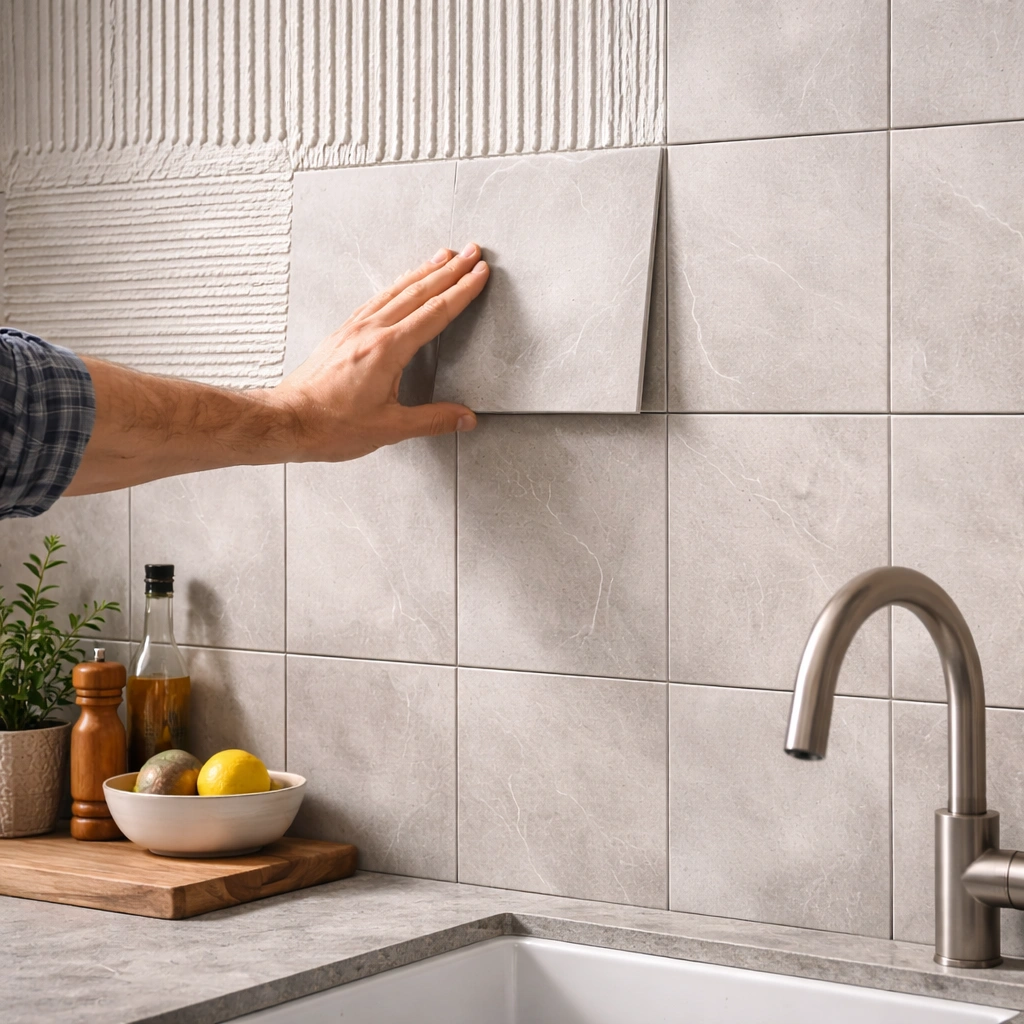
Wall Tiles are specifically manufactured for vertical surfaces such as interior and exterior walls. They are lighter in weight and focus more on visual appeal than load-bearing strength.
Key Characteristics of Wall Tiles
-
Lightweight structure
-
Lower thickness compared to floor tiles
-
Smooth or glossy surface finishes
-
Decorative designs and patterns
-
Easy to cut and install
Wall tiles are commonly used in bathrooms, kitchens, living room feature walls, and exterior elevations.
What Are Floor Tiles?
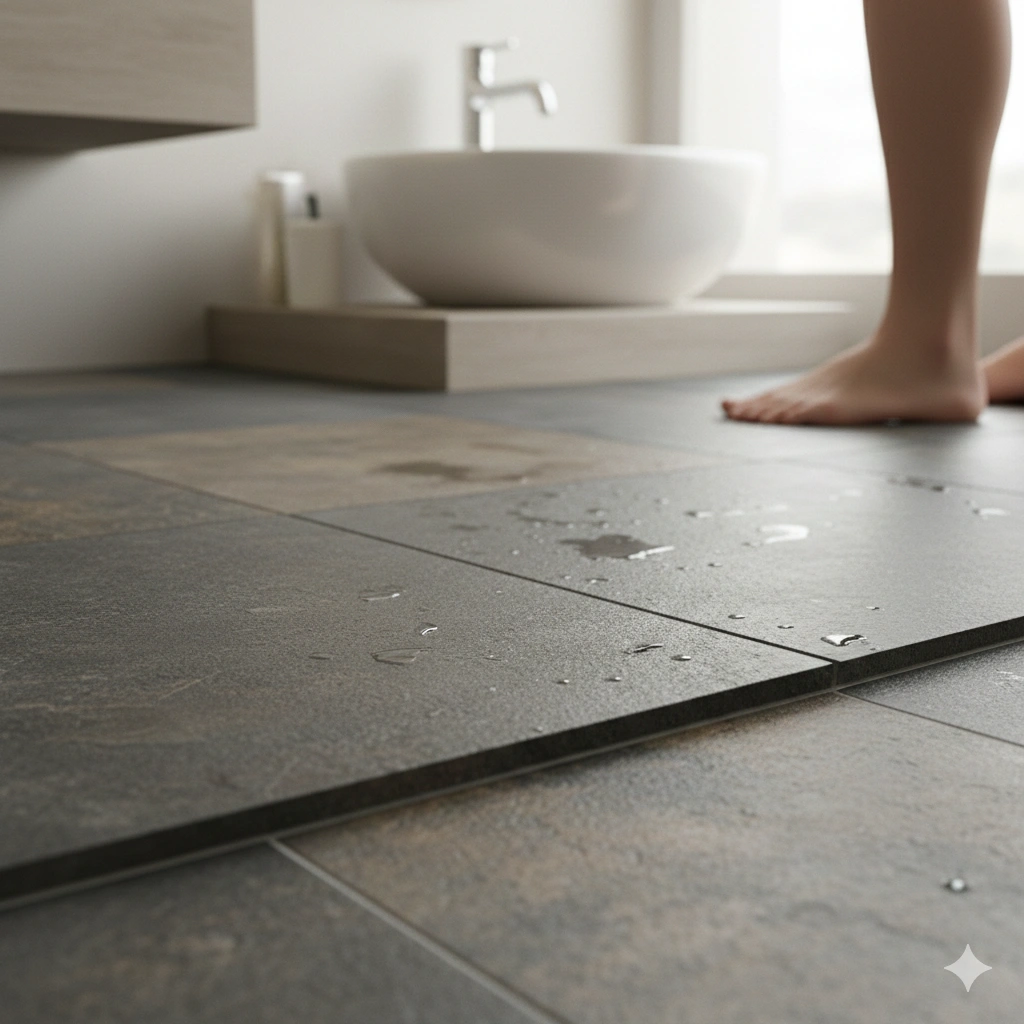
Floor Tiles are designed to withstand pressure, impact, and continuous movement. They are thicker, denser, and more durable than wall tiles.
Key Characteristics of Floor Tiles
-
High load-bearing capacity
-
Thicker and heavier construction
-
Anti-slip or matte surface finishes
-
High abrasion resistance
-
Suitable for heavy foot traffic
Floor tiles are used in living rooms, bedrooms, kitchens, commercial spaces, corridors, and outdoor areas.
Wall Tiles vs Floor Tiles – Key Differences Explained
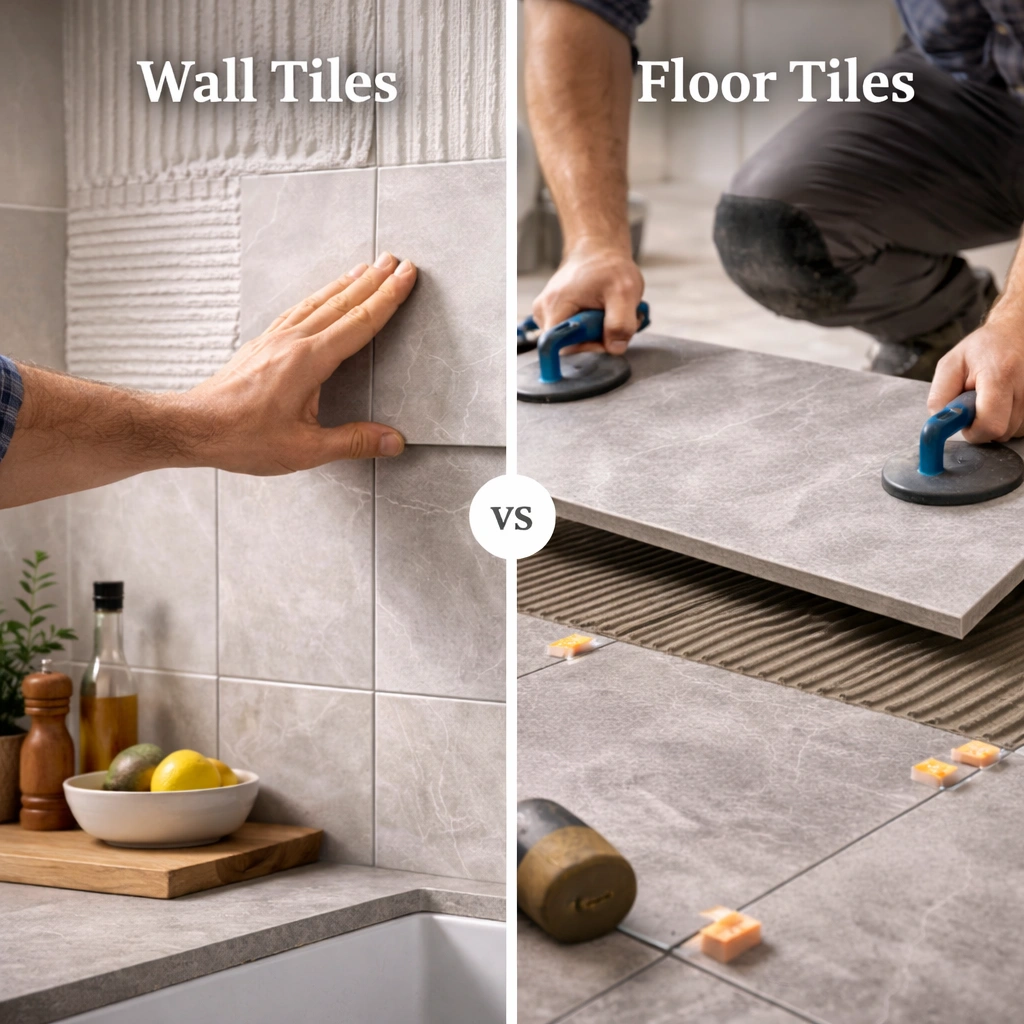
Understanding the technical differences between Wall Tiles and Floor Tiles is essential before making a purchase.
1. Thickness and Strength
Floor Tiles are thicker and stronger, designed to support heavy loads. Wall Tiles are thinner and can crack under pressure if used on floors.
2. Slip Resistance
Floor Tiles often have anti-skid or matte finishes for safety. Wall Tiles usually have glossy finishes that can be slippery when wet.
3. Water Absorption
Wall Tiles tend to absorb more water, making them unsuitable for flooring. Floor Tiles have lower porosity, making them ideal for wet areas.
4. Surface Finish
Wall Tiles focus on visual appeal with polished and decorative surfaces. Floor Tiles prioritize functionality with textured or matte finishes.
5. Weight and Installation
Wall Tiles are lighter and easier to install on vertical surfaces. Floor Tiles require stronger adhesives and proper leveling.
Can Floor Tiles Be Used on Walls?
Yes, Floor Tiles can be used on walls, but with certain considerations:
-
Strong wall support is required
-
Skilled installation is necessary
-
Tile weight must be manageable
Many modern designs use large-format floor tiles on walls for a seamless look.
Can Wall Tiles Be Used on Floors?
This is not recommended. Wall Tiles lack the strength and slip resistance required for flooring applications. Using them on floors can lead to:
-
Cracks
-
Slippery surfaces
-
Shorter tile lifespan
For safety and durability, wall tiles should remain on walls only.
How to Choose Between Wall Tiles and Floor Tiles for Your Space
Bathrooms
-
Use Wall Tiles for shower walls and backsplashes
-
Use anti-skid Floor Tiles for safety
Kitchens
-
Wall Tiles for backsplashes and cooking areas
-
Floor Tiles for durability and stain resistance
Living Rooms
-
Floor Tiles with matte or textured finishes
-
Decorative wall tiles for feature walls
Commercial Spaces
-
Heavy-duty Floor Tiles for high foot traffic
-
Wall Tiles for branding and aesthetics
How to Choose Between Wall Tiles and Floor Tiles
When choosing tiles, consider these factors:
-
Area of Application: Wall or floor
-
Load Requirements: Furniture and foot traffic
-
Slip Resistance: Especially for wet zones
-
Design Preference: Decorative or subtle
-
Maintenance Needs: Cleaning frequency
Making informed choices ensures long-term satisfaction.
Importance of Choosing a Trusted Tile Manufacturer
Tile performance depends heavily on manufacturing quality. Reputed brands follow strict quality control, proper firing temperatures, and material consistency.
Manufacturers like Lakshmi Ceramics focus on producing tiles that meet durability, safety, and design standards, making them suitable for both residential and commercial use.
Final Thoughts
Understanding the differences between Wall Tiles and Floor Tiles is essential for creating safe, durable, and visually appealing spaces. Each tile type is designed for a specific purpose, and using them correctly ensures better performance and longer life.
From kitchens and bathrooms to living rooms and commercial areas, choosing the right tiles makes a noticeable difference in comfort and maintenance. By selecting high-quality tiles from trusted manufacturers and applying them in the right areas, you can achieve both style and durability with confidence.
People Also Ask (FAQs)
1. What is the main difference between wall tiles and floor tiles?
The main difference lies in strength and thickness. Floor tiles are stronger and thicker, while wall tiles are lighter and decorative.
2. Can floor tiles be used as wall tiles?
Yes, floor tiles can be installed on walls if the structure supports the weight.
3. Are wall tiles durable?
Wall tiles are durable for vertical applications but are not designed to handle foot traffic.
4. Which tiles are better for bathrooms?
Wall tiles are ideal for bathroom walls, while anti-skid floor tiles are essential for bathroom floors.
5. Do wall tiles and floor tiles require different adhesives?
Yes, floor tiles require stronger adhesives compared to wall tiles.

Whatsapp Chatx
Hi! Click one of our representatives below to chat on WhatsApp or send us email to customercare@lakshmiceramics.in
 |
Mr. Ram S +91 96551 70955 |
|
Mr. Martin +91 78688 86655 |