
Bathroom Floor Tiles: Slip Resistance, Finishes and Selection Tips - Blog
A beautiful bathroom floor can become unsafe when water, soap and shampoo collect on it. That is why choosing tiles based only on colour or pattern is rarely a good idea. The best bathroom floor tiles for wet areas must balance grip, low water absorption, durability, cleaning needs and barefoot comfort.
No surface is completely slip-proof. Real-world safety also depends on drainage, installation, footwear and maintenance. This bathroom floor tile selection guide explains how slip resistance is measured, which finishes work well and what to verify before you buy.
What Makes Bathroom Floor Tiles Slip-Resistant?
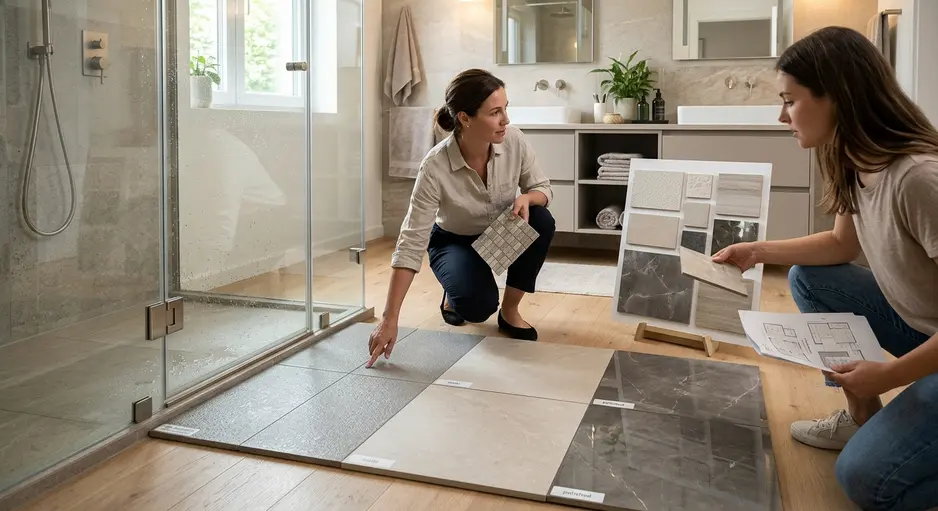
Traction comes from the complete flooring system, not just an “anti-slip” label. Surface texture, water, cleaning residue, grout joints and floor slope all affect how secure the floor feels.
Surface Texture and Micro-Grip
Textured bathroom tiles have raised details or small channels that can improve contact underfoot. Some products have visible patterns, while others use a subtle micro-grip that is easier to clean.
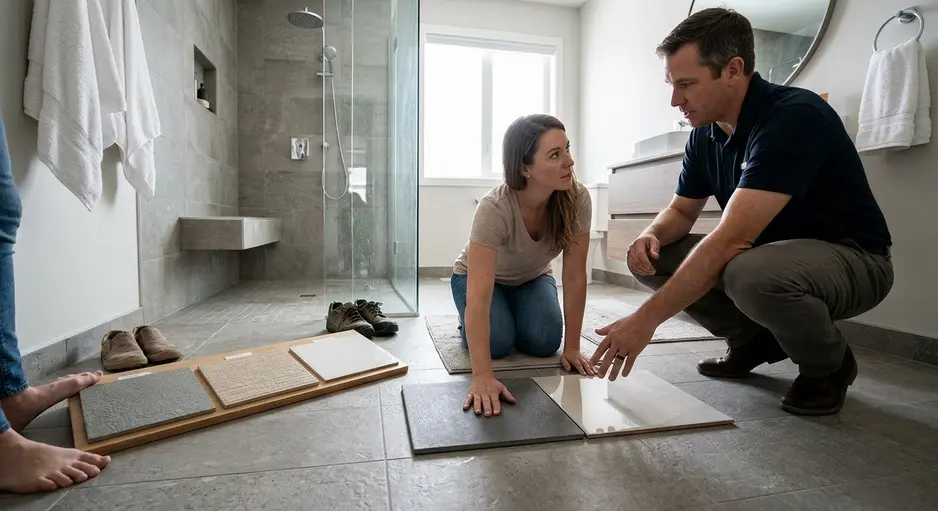
More texture is not always better. A very rough finish may hold soap and dirt, making daily care harder. Also, a matte appearance does not prove that a tile has suitable wet-area traction. Ask for test information instead of judging the finish by sight.
Coefficient of Friction and Traction
The coefficient of friction describes how much traction exists between the floor and a foot or shoe. Static testing looks at the force needed to start movement. Dynamic testing considers traction while movement is already taking place.
ANSI A326.3 measures dynamic coefficient of friction. A wet DCOF result of 0.42 or more is commonly referenced for certain level interior spaces expected to be wet. However, it is not a universal safety guarantee. Soap, footwear, slope and maintenance can change actual performance.
Wet Pendulum and Other Slip Tests
Wet pendulum slip resistance testing may report P classifications, commonly from P0 to P5. Higher classifications indicate greater resistance under the stated test conditions. DIN 51130 uses R ratings for shod testing with oil, while DIN 51097 uses A, B and C ratings for barefoot wet areas.
These systems use different methods and are not interchangeable. Request the test method, result and intended-use advice from your bathroom tile supplier.
How Do You Choose Slip-Resistant Bathroom Tiles?
Match the Tile to the Risk Level
Dry vanity area: Prioritise moderate grip, stain resistance and easy cleaning for occasional splashes.
Main bathroom floor: Look for tested wet traction and resistance to soap and shampoo residue.
Shower floor: Choose a barefoot-friendly finish with stronger wet-area grip and effective drainage.
Elderly-access bathroom: Prioritise stable footing, low lippage, visual contrast and comfortable texture.
Commercial washroom: Check slip performance, long-term wear, stain resistance and chemical resistance to bathroom cleaners.
Check Composition and Water Absorption
Porcelain versus ceramic tile composition is an important comparison. Porcelain is made from refined materials and fired to create a dense body. Under ISO 13006 and ASTM C373 classifications, porcelain generally has a water absorption rate of 0.5% or less.
Ceramic can also work well when it is rated for floors and suitable for the location. The right choice depends on product specifications, traffic and installation conditions. Low-absorption tiles resist moisture, but they do not replace an installation substrate and waterproofing membrane.
Questions to Ask Your Supplier
- Is the product approved for floor and wet-area use?
- Which wet or dry slip-resistance method was used?
- Is the finish recommended for barefoot areas?
- What is the stated water absorption rate?
- How well does it resist stains and bathroom cleaners?
- Are test reports, shade details and installation instructions available?
Lakshmi Ceramics can be consulted when comparing tile finishes, sizes, samples and project requirements. Confirm the technical specifications of the individual product before making a final selection.
Matte vs Glossy Bathroom Floor Tiles
Are Matte Tiles Less Slippery?
Matte bathroom floor tiles often provide better practical grip than highly polished surfaces. They may also hide water marks and minor dust more effectively. Yet “matte” describes appearance, not verified slip performance. Two matte products can behave very differently when wet.
Where Do Glossy Tiles Work Best?
Glossy tiles reflect light and can make a compact room appear brighter. They are often better suited to walls or lower-risk dry zones. A glossy product should be used on a wet floor only when it is floor-rated and supported by suitable test data.
Polished finishes can become slippery when covered by water or soap. They may also show footprints and water spots more clearly.
Bathroom Tile Finishes to Compare
- Matte: A balanced option for many general bathroom floors.
- Satin: Offers a soft sheen with a less reflective appearance.
- Structured: Adds surface texture and may offer better grip in wet zones.
- Stone-look: Creates a natural appearance, often with a matte finish.
- Wood-look: Adds warmth while retaining the practical qualities of tile.
- Polished: Best considered for walls or verified low-risk applications.
- Mosaic: Useful around shower slopes due to its small size and extra grout joints.
Which Tile Size and Design Provide Better Grip?
Grout Joint Spacing and Slip Control
Small tiles and mosaics create more grout lines. These joints can add underfoot traction, especially on shower floors. However, grout cannot make an unsuitable surface safe. The tile itself still needs to meet the project’s wet-area requirements.
Joint width and grout texture also affect comfort and cleaning. More joints can mean more maintenance, so suitable grout and careful installation are essential for mould and mildew prevention around grout.
Tile Size and Cutting Requirements
Small-format products adapt more easily to a floor slope toward drainage outlets. Large-format tiles create a clean, open look but may need extra cuts around drains. Poor cutting can result in uneven edges, lippage or water pooling.
Bathroom Floor Tile Designs With Better Grip
- Stone-look matte porcelain
- Concrete-look tiles with micro-texture
- Textured wood-look planks
- Small geometric floor tiles
- Coordinated mosaics for shower zones
One practical approach is to use large matte tiles in the main area and matching mosaics in the shower. This keeps the design consistent while helping the floor follow the drainage slope.
What Is the Safest Bathroom Flooring for Elderly People?
The safest bathroom flooring for elderly people combines tested wet traction with stable, comfortable footing. Avoid abrupt floor changes, excessive roughness and raised tile edges. A low-lippage installation can reduce trip risks, while colour contrast helps users identify walls, thresholds and changes in level.
Underfoot comfort and barefoot safety matter too. A surface that is too harsh may be uncomfortable, while a smooth polished finish can lose grip when contaminated.
Design the Whole Room for Safety
- Create an accurate slope that carries water toward the drain.
- Use a level-entry shower where practical.
- Install grab bars near the shower and toilet.
- Provide bright, even lighting.
- Prevent water from pooling near entrances and fixtures.
- Use secure bathmats only where they will not create a trip hazard.
Installation and Maintenance Affect Safety
Substrate and Waterproofing Membrane
Waterproof bathroom flooring requires more than low-absorption tile. Tiles and grout form the visible surface, but they are not the complete waterproofing system. The substrate must be sound, level and prepared for the selected materials.
A compatible membrane, sealed penetrations and suitable movement joints help protect the structure below. Installation should follow the tile and waterproofing manufacturers’ instructions.
Drainage and Floor Slope
Standing water raises slip risk and encourages mould growth. Drain placement and slope must be planned before laying the tiles. Texture should never be used to compensate for poor drainage.
Soap Residue and Cleaning
Soap film can reduce grip even on anti-slip bathroom tiles. Choose a compatible, pH-appropriate cleaner and rinse the surface well. Avoid waxes or coatings unless the tile manufacturer approves them, as they may change traction.
Deep textures may need more brushing than smooth surfaces. For easy-to-clean bathroom floor tiles for daily use, look for moderate texture with suitable stain resistance and cleaning requirements.
Simple Maintenance Schedule
- Daily: Remove standing water and rinse away visible residue.
- Weekly: Clean the floor and grout with a compatible product.
- Periodically: Inspect drains, grout, sealant and high-use areas.
- As needed: Repair cracked grout or failed sealant without delay.
Residential vs Commercial Tile Selection
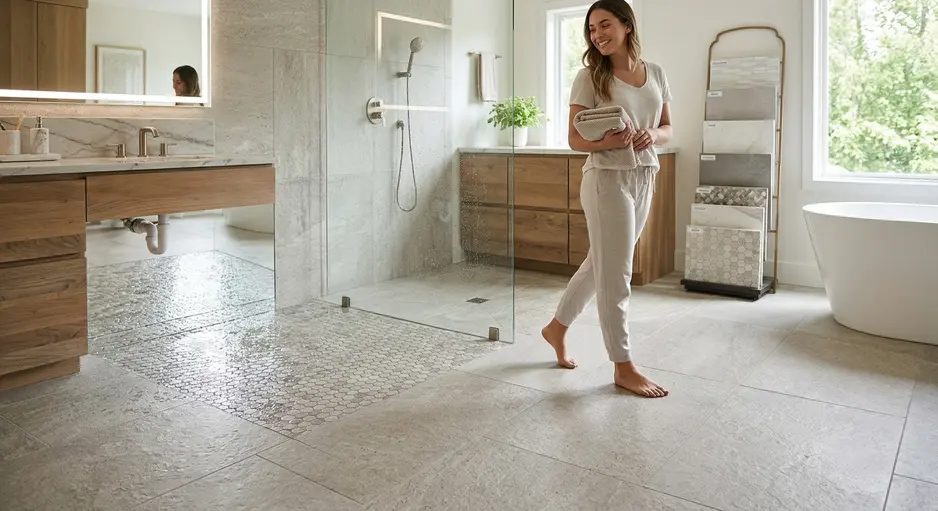
Residential bathrooms usually need a balance of comfort, appearance and simple care. Commercial washrooms in hotels, gyms, hospitals, schools and offices face heavier traffic and more frequent cleaning.
Durable bathroom tiles for high-moisture environments should offer long-term wear performance, stain resistance and compatibility with expected cleaning chemicals. Project buyers should also check shade consistency, calibre, replacement needs and compliance with the project specification.
Balance Grip With Easy Cleaning
Very deep textures may provide strong traction but can increase cleaning time. Moderately textured, tested finishes often create a better balance in areas that need frequent sanitation. Where possible, assess full-size samples using the expected contaminants and cleaning process.
Evaluate the Supplier
Architects and contractors should request technical documents and samples before approval. Confirm batch details, size tolerance, stock continuity, lead time and required quantity. Add a wastage allowance based on the layout, tile size and cutting requirements.
An established bathroom tile supplier such as Lakshmi Ceramics can help buyers compare options for residential and commercial projects. Final approval should remain based on verified product data and the needs of the installation area.
Bathroom Floor Tile Selection Checklist
- Confirm that the tile is rated for floor use.
- Request wet slip-resistance test information.
- Match the product to the area and expected users.
- Check material type and water absorption.
- Compare matte, satin, textured and polished finishes.
- Consider barefoot comfort and daily cleaning effort.
- Match tile size to the slope and drain design.
- Verify stain, wear and chemical resistance.
- Plan the grout width, colour and maintenance routine.
- Confirm substrate preparation and waterproofing.
- View samples under the bathroom’s actual lighting.
- Allow for cutting, breakage and future repairs.
Choose Grip and Performance, Not Appearance Alone
The right bathroom floor tiles should suit the users, moisture level and cleaning routine. Compare tested traction, finish, water absorption, drainage needs and long-term durability before focusing on colour or pattern. Samples should also be viewed in the room and assessed under expected wet conditions.
Explore bathroom tile options from Lakshmi Ceramics or speak with the team for help comparing finishes, sizes, available specifications and project requirements. A careful selection, supported by sound waterproofing and professional installation, creates a floor that remains practical and comfortable for years.
Frequently Asked Questions
1. What are the best bathroom floor tiles for wet areas?
Floor-rated matte or textured porcelain is a common choice because it can combine low water absorption with good durability. Mosaics may suit sloped shower floors. Whatever the material, check verified wet slip resistance, barefoot suitability and installation requirements.
2. How can I tell if a bathroom tile is slip-resistant?
Read the technical data and identify the test method. Look for wet pendulum, DCOF, ramp or barefoot wet-area results. Do not rely only on an “anti-slip” label, a rough appearance or a general product name.
3. Are matte bathroom floor tiles safer than glossy tiles?
Matte surfaces often offer better practical traction than polished ones, especially when wet. However, finish terminology alone cannot confirm safety. A tested glossy product may outperform an untested matte product, so compare verified results.
4. Is porcelain or ceramic better for bathroom floors?
Porcelain is denser and usually absorbs less water, making it useful in wet, high-use spaces. Ceramic may be suitable and cost-effective when approved for floor use. Correct installation is essential for both.
5. Do textured bathroom tiles become difficult to clean?
They can require more effort because soap and dirt settle in deeper surface details. A moderate micro-texture often balances traction and care. Check stain resistance and cleaner compatibility before buying.

Whatsapp Chatx
Hi! Click one of our representatives below to chat on WhatsApp or send us email to customercare@lakshmiceramics.in
 |
Customer Support +91 74488 10909 |