
Why Choose Vitrified Tiles for Parking Areas? - Blog
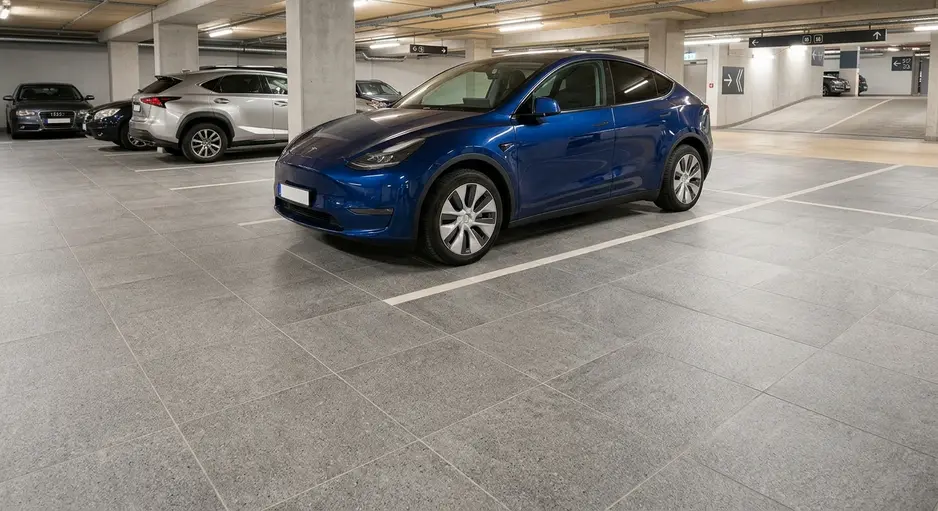
Parking floors face far more stress than most indoor surfaces. They carry vehicle weight, resist tyre friction and deal with dust, rain, oil leaks and temperature changes. Ordinary indoor tiles may not offer the strength or surface grip needed for these conditions.
Purpose-made vitrified tiles for parking areas can provide a durable and easy-to-clean surface. However, the right result depends on tile strength, finish, drainage and installation quality. Here is what you should consider before selecting tiles for a garage, driveway or commercial parking floor.
What Are Vitrified Parking Tiles?
How vitrification creates a dense tile body
Vitrified tiles are made by firing selected raw materials at a high temperature. This process creates a dense and compact tile body with low water absorption. The result is a surface that can resist moisture, stains and regular wear when chosen for the correct application.
Vitrification may also improve dimensional stability and outdoor durability. Still, “vitrified” describes a broad tile category. It does not mean that every product is suitable for vehicles, ramps or exposed outdoor spaces.
Parking tiles versus indoor floor tiles
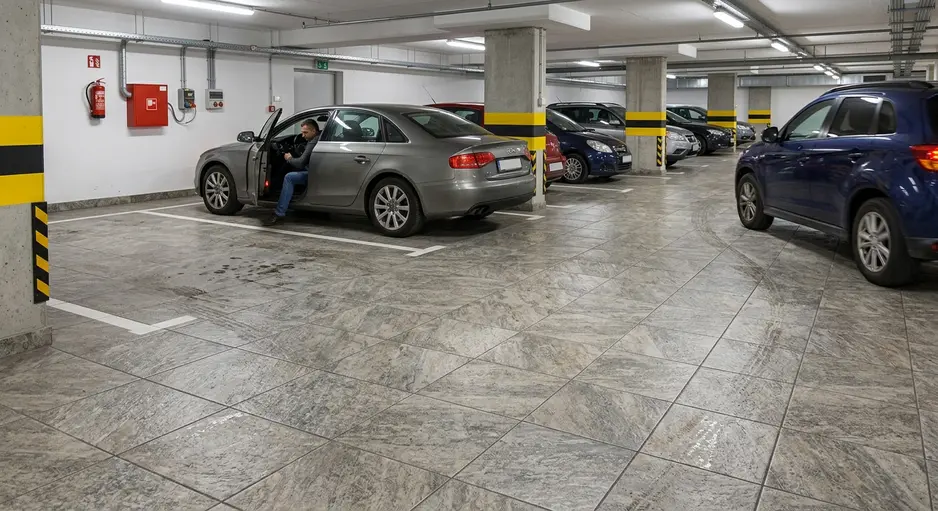
Indoor tiles are often designed for foot traffic in dry spaces. Parking area vitrified tiles need to handle vehicle movement, surface abrasion, outdoor moisture and occasional impact. They also require better grip, especially where rainwater, mud or oil may be present.
Before buying, check the manufacturer’s technical data sheet. Look for breaking strength, abrasion performance, water absorption and recommended applications. Do not select a parking tile based on colour, design or thickness alone.
Why Are Vitrified Tiles Good for Parking Areas?
Load capacity for regular vehicle traffic
Purpose-made heavy duty vitrified tiles may support passenger cars, motorcycles and SUVs when installed on a sound base. Their dense body can provide the breaking strength needed for regular vehicle traffic.
Tile strength is only one part of the system. The concrete below the tile must remain stable, and the adhesive should provide full contact. Hollow areas beneath a tile can create weak points when a wheel passes over them.
Vehicle weight is also different from sharp impact. A correctly specified floor may carry a parked car but can still suffer damage if a heavy metal tool falls on an exposed edge.
Abrasion and scratch resistance
Car tyres carry sand and grit across a parking floor. Steering while the vehicle is stationary also creates tyre friction. This wear is often greatest near gates, ramps and turning points.
Tiles with good abrasion resistance maintain their appearance for longer in these areas. Some products are marketed as scratch resistant parking tiles, but no surface should be treated as completely scratch-proof. Performance varies with the tile body, finish and type of traffic.
Low water absorption and weather resistance
A dense tile body limits the amount of moisture that can enter the material. This makes suitable outdoor vitrified tiles useful in car porches and open parking spaces exposed to rain.
Weather resistance also depends on the complete flooring system. Adhesive selection, grout condition, drainage and movement joints all matter. Where frost is a concern, project teams should check relevant test results, such as those covered by ISO 10545-12.
Outdoor floors expand and contract as temperatures change. Correctly placed joints help manage thermal expansion and reduce stress within the tiled surface.
Oil and stain resistance
Parking floors often collect motor oil, grease, mud and tyre marks. Stain resistant parking tiles can make these areas easier to clean than porous materials. A well-chosen surface is less likely to absorb spills quickly.
Even so, stain resistance does not mean that the floor is maintenance-free. Oil and grease should be removed as soon as possible. Prompt cleaning also reduces the risk of a slippery surface.
Practical design choices
Vitrified parking tiles come in stone, concrete, geometric and neutral looks. This makes it easier to coordinate the parking area with a home façade, entrance or commercial building.
Mid-tone colours and subtle patterns can hide dust and tyre marks better than very light tiles. Yet appearance should remain secondary to load performance, outdoor suitability and surface grip.
Can Vitrified Tiles Withstand Cars and Heavy Loads?
Tile strength is only part of the floor
Correctly selected vitrified tiles for car parking can withstand their intended vehicle loads. Their performance, however, depends on the supporting layers beneath them. A strong tile may still crack if it is laid over an unstable base or installed with gaps below it.
A dependable parking floor normally requires:
- A stable and properly cured concrete substrate
- An adhesive or mortar system suitable for outdoor use
- Full bedding without hollow spots beneath the tiles
- Suitable grout and properly planned joint widths
- Perimeter, intermediate and structural movement joints
- Protection for exposed corners and tile edges
Residential cars versus commercial traffic
A two-car home driveway may receive only a few vehicle movements each day. In this setting, vitrified tiles for garages may need to support passenger cars, motorcycles and an occasional SUV.
A retail or office entrance can receive continuous movement throughout the day. Repeated braking and turning increase surface wear even when the vehicles are similar in size. Parking tiles for commercial spaces may therefore need higher breaking strength, better abrasion performance and a more pronounced surface texture.
Tiles may not be appropriate for every load. Parking areas used by heavy trucks, industrial equipment or vehicles with severe point loads need a project-specific assessment.
Which Vitrified Tiles Are Best for Parking Areas?
Choose a textured, slip-resistant surface
A textured, structured or suitable matt finish is usually more practical for an exposed parking floor. It can provide better surface grip when water or fine dust is present. Polished finishes may become slippery when wet or contaminated by oil.
Terms such as “anti-skid” should not be accepted as an absolute guarantee. Ask for documented wet slip-resistance results where available. Consider the floor slope, expected contamination and whether people will walk across the same surface.
Check tested strength and impact performance
Do not rely only on the words “heavy duty.” Request technical values that match the vehicle type and frequency of use. ISO 10545-4 covers modulus of rupture and breaking strength testing for ceramic tiles.
Thickness can influence performance, but it does not provide the full answer. Tile composition, size, manufacturing quality, substrate condition and adhesive coverage must be assessed together.
Review abrasion and stain resistance
For unglazed tiles, ISO 10545-6 addresses resistance to deep abrasion. For glazed products, ISO 10545-7 covers surface abrasion resistance. Chemical and stain resistance are addressed by ISO 10545-13 and ISO 10545-14.
ISO 13006 and EN 14411 provide recognized classifications and characteristics for ceramic tiles. In India, IS 15622 is also relevant to pressed ceramic tiles. A supplier should still confirm that the specific product is recommended for outdoor vehicle traffic.
Select a practical tile size
Tile size affects drainage, joint layout and installation over slopes. Smaller or moderate formats can be easier to fit around drains, channels and changes in level. Larger tiles create fewer joints but require a very even base and careful adhesive application.
Format also affects replacement. If one tile becomes damaged, a practical size may be easier to remove without disturbing a large part of the floor.
Parking tile buying checklist
- Approved by the supplier for outdoor use and vehicle traffic
- Low water absorption supported by test information
- Verified breaking strength for the intended application
- Abrasion resistance suited to traffic frequency
- A slip resistant surface for expected wet conditions
- Resistance to oil, grease and common stains
- Compatible outdoor adhesive and grout systems
- Spare tiles retained from the same production batch
Residential vs Commercial Parking Tiles
Parking tiles for residential areas
Residential applications include garages, car porches, villa entrances, apartment bays and vitrified tiles for driveways. The main priorities are safe grip, easy cleaning, visual appeal and support for normal passenger vehicles.
Homeowners should also consider how rain enters the area. A covered garage and an exposed driveway may require different finishes and drainage plans.
Parking tiles for commercial spaces
Office parking, retail entrances, apartment common areas and institutional buildings experience more frequent traffic. These projects need close attention to abrasion, turning zones and parking floor maintenance.
A textured surface may improve grip, but very deep textures can trap dirt. The chosen finish should balance slip resistance with practical cleaning.
When another flooring system may be better
Tiles may not be the right choice over weak concrete, moving ground or a surface with unresolved structural cracks. Severe impact zones and truck yards may also need an industrial flooring system designed for those loads.
An experienced contractor or engineer should assess demanding sites before materials are ordered.
How Should Parking Area Vitrified Tiles Be Installed?
Prepare a sound substrate
The concrete base should be cured, stable and free from loose material, oil and dust. Existing cracks or settlement must be investigated before installation. Tiles cannot correct structural defects below the surface.
Plan the slope and drainage
Good drainage considerations begin before tiles are laid. The floor needs a consistent slope toward a drain or open edge. Low spots can collect water, increase staining and create a slip hazard.
Tile layout should work with drain locations, thresholds and ramps. There is no single slope that suits every project, so follow local construction requirements and site-specific guidance.
Use the correct adhesive with full coverage
Choose an outdoor-rated adhesive that is compatible with the tile, substrate and local climate. Follow the adhesive manufacturer’s mixing, application and curing instructions.
Full contact is especially important beneath wheel paths. Voids can leave unsupported areas that are more likely to crack under pressure or impact.
Provide movement joints
Perimeter and intermediate joints allow the tiled floor to respond to temperature changes. Existing structural or movement joints should not be covered with rigid tiles and grout.
The location and spacing of joints depend on the project design, exposure and area size. Seek professional guidance rather than using one layout for every site.
Allow the floor to cure
Keep vehicles off the finished floor until the adhesive and grout have cured fully. Follow product-specific instructions because curing time changes with the materials, weather and site conditions.
How Do You Maintain Vitrified Parking Floor Tiles?
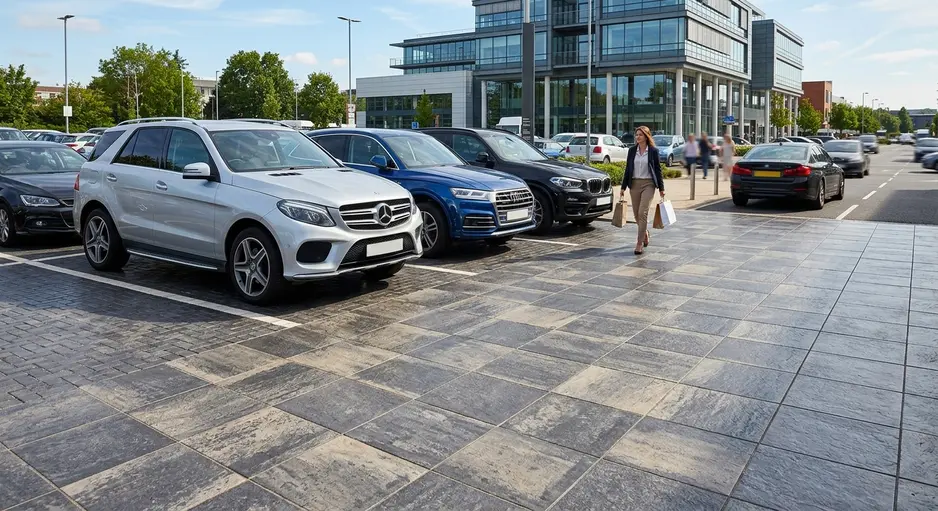
Regular care helps durable parking floor tiles retain their finish and grip. Sweep away sand and grit before they are ground into the surface by tyres. Clean oil, grease and other spills promptly with a cleaner recommended for the tile and grout.
- Avoid harsh acids unless the product supplier approves them.
- Do not use abrasive metal tools that can mark the surface.
- Inspect grout, movement joints and drainage channels regularly.
- Replace damaged tiles before water affects exposed edges.
- Keep spare tiles from the original batch for future repairs.
- Increase cleaning frequency in busy commercial areas.
Choose a Parking Floor That Performs
Vitrified tiles for parking areas can combine load performance, low water absorption, abrasion resistance, surface grip and easy cleaning. Success depends on selecting a product made for the expected traffic and installing it on a stable, well-drained base.
For help comparing finishes, formats and technical specifications, explore the options available from Lakshmi Ceramics. Confirm outdoor and vehicle-use suitability before making your final selection.
Frequently Asked Questions
1. Are vitrified tiles suitable for outdoor car parking?
Yes, purpose-made outdoor products can be suitable when they offer adequate strength, weather resistance and wet-condition grip. The base, adhesive, drainage and installation must also support vehicle use.
2. Do vitrified parking tiles crack under car weight?
Correctly specified tiles installed on a stable base with full adhesive coverage should handle their intended loads. Cracks are often linked to substrate movement, hollow spots, severe impact or the wrong product choice.
3. Are vitrified parking tiles slippery when wet?
Performance depends on the finish. Textured or structured surfaces are generally more suitable than polished tiles, but buyers should request documented slip-resistance information.
4. What tile thickness is best for parking?
There is no universal thickness for every project. Breaking strength, tile format, body composition, substrate quality and expected traffic should be evaluated together.
5. Can these tiles be used for driveways and garages?
Yes, if the product is rated for outdoor flooring and vehicle traffic. Correct drainage, movement joints, adhesive coverage and curing remain essential.

Whatsapp Chatx
Hi! Click one of our representatives below to chat on WhatsApp or send us email to customercare@lakshmiceramics.in
 |
Customer Support +91 74488 10909 |