
Large Format Wall Tiles: Benefits and Design Ideas - Blog
Broad, uninterrupted tile surfaces can make an interior feel calm, spacious and refined. Unlike smaller tiles, large format wall tiles create fewer visual breaks because they need fewer grout joints. They work well in bathrooms, kitchens, living rooms, feature walls and commercial interiors.
Large format wall tiles are oversized ceramic or porcelain tiles designed to cover more wall area with fewer pieces. They can make a room look more open and create a seamless visual appearance. However, good results depend on the right tile, a flat wall, careful planning and skilled installation.
What Are Large Format Wall Tiles?
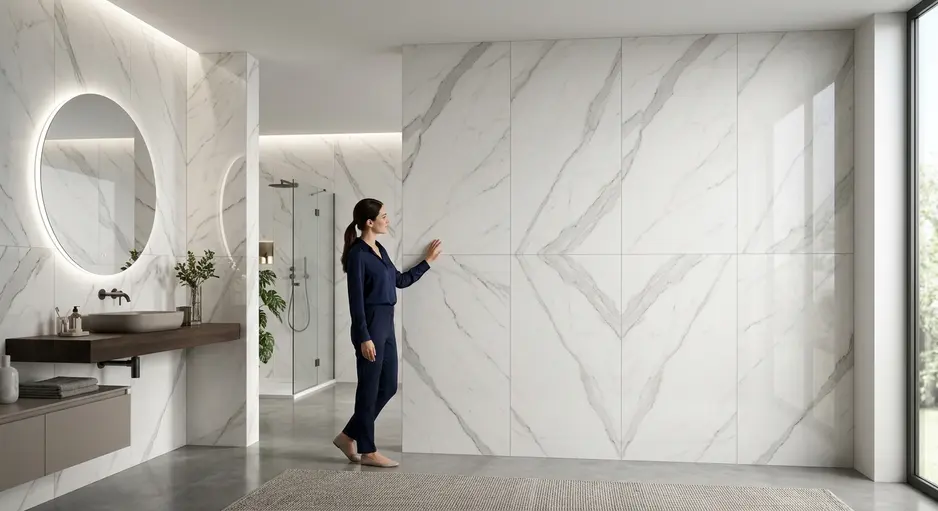
A tile is commonly described as large format when at least one edge is longer than 15 inches. Popular metric sizes include 600 × 1200 mm, 800 × 1600 mm and 1200 × 2400 mm. Available dimensions vary between manufacturers and collections.
Common Sizes and Formats
Standard large wall tiles are often thicker and can be handled in a similar way to conventional tiles, although their weight and size require added care. They are widely used for full-height bathroom walls, kitchen backsplashes and living room features.
Thin, gauged porcelain panels are different. These slab-style products can cover a much larger area, but they may need lifting frames, specialist cutting tools and trained installers. Always confirm the tile’s thickness, weight and handling instructions before placing an order.
Do Large Wall Tiles Make a Room Look Bigger?
Yes, they can. Fewer grout lines reduce visual breaks, which may make walls seem wider or taller. The effect is especially useful in compact bathrooms and narrow living spaces. Colour, lighting, layout, furniture scale and joint colour also influence how spacious the room feels.
What Are the Benefits of Large Wall Tiles?
Minimal Grout Lines and Visual Continuity
One of the main benefits is the reduced number of grout joints. A continuous surface looks less busy and allows patterns to remain visible across the wall. This makes large format wall tiles for a seamless look popular in modern residential and commercial projects.
Tiles with rectified edges can support narrow, consistent joints when installed correctly. However, “seamless” describes the visual effect. It does not mean that tiles should be installed without grout. Suitable grout and movement joints are still essential.
Easier Routine Cleaning
Less grout means fewer joint areas where dust, cooking grease or soap residue may collect. Most glazed surfaces are easy to clean with a soft cloth or mop and a manufacturer-approved, pH-neutral cleaner.
No tile is completely maintenance-free. Textured surfaces can hold more dirt, while polished finishes may show fingerprints, water marks or cleaning streaks. Grout colour and quality also affect long-term upkeep.
Stronger Design Impact
Oversized tiles show marble veins, stone movement and subtle concrete effects with fewer interruptions. This creates contemporary interior aesthetics without the need for many decorative elements. A single tiled wall can become the main visual feature of a room.
Useful Performance Qualities
Depending on the product, large format porcelain wall tiles may offer low water absorption, stain resistance, scratch resistance and stable colour. These features can be valuable in wet areas, kitchens and busy commercial spaces.
Performance varies by tile, glaze, finish and intended application. Review the current technical data sheet rather than assuming that every porcelain or ceramic product has the same properties.
Where Can You Use Large Wall Tiles?
Living Rooms
Large wall tiles for living rooms can create a striking backdrop behind a television, sofa or display unit. A marble look surface adds elegance, while a stone look surface brings warmth and depth. Floor-to-ceiling installation can also make the wall feel taller.
For example, a warm beige 600 × 1200 mm stone-look wall behind a media console can add texture without making a compact room feel cluttered. Timber, metal, plants and soft fabrics help balance the harder tiled surface.
When using large format tiles for feature walls, position the pattern where furniture will not hide its best details. Plan joints around shelves, screens and wall lights before installation begins.
Bathrooms and Shower Walls
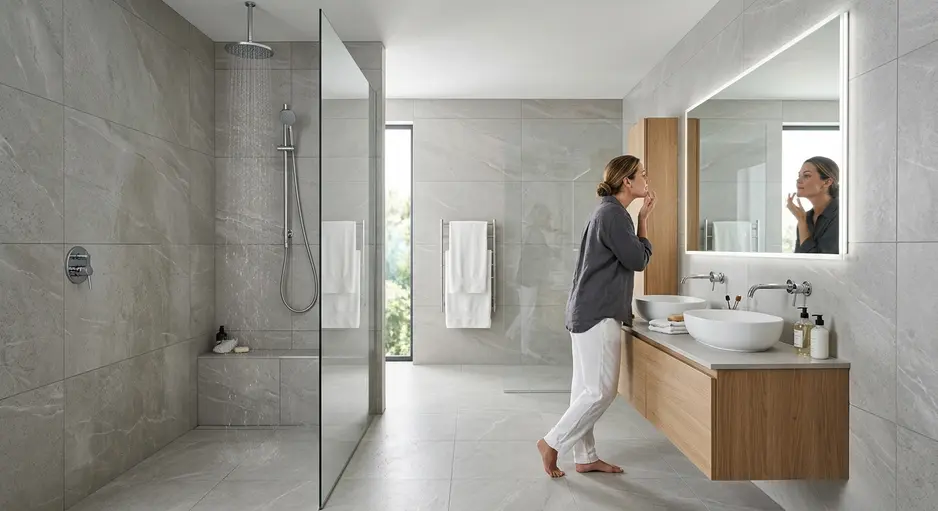
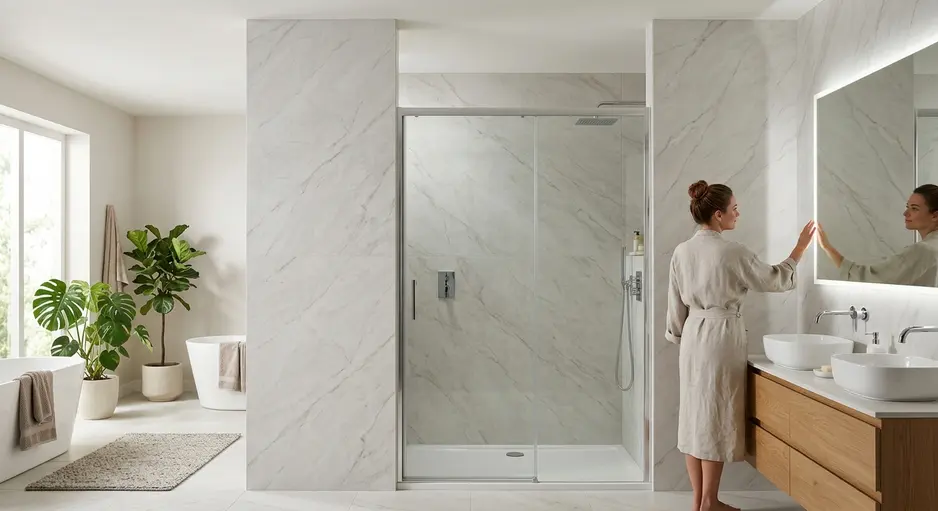
Large wall tiles for bathrooms are suitable for both compact and spacious rooms. Light colours and soft veining can make a small bathroom feel more open. Continuing the same tile across the shower and vanity walls creates a calm, connected design.
A matte finish or low-sheen surface can reduce glare under bright bathroom lights. Fewer joints also simplify routine cleaning. However, tile and grout do not replace waterproofing. The waterproofing system, adhesive and tile must all be suitable for wet areas.
Kitchens and Backsplashes
Large wall tiles for kitchens can form a low-joint backsplash behind worktops and cabinets. Stain-resistant porcelain may be useful near areas exposed to oil, food splashes and steam. Smooth finishes are usually easier to wipe than deeply textured ones.
Plan electrical sockets, switches, cabinet edges and extractor units before choosing the tile layout. Good planning can reduce awkward cut-outs and narrow tile pieces around visible fittings.
Commercial Spaces
Large format wall tiles for commercial spaces can be used in reception areas, retail stores, restaurants, hotel lobbies and offices. Their broad patterns support a consistent visual identity, while fewer joints can make routine upkeep easier.
Project teams should review maintenance needs, impact exposure, fire requirements and applicable building codes. The tile specification must suit the exact location rather than appearance alone.
Which Large Wall Tile Designs Work Best?
Marble-Look and Bookmatch Designs
A marble look surface works well in formal living rooms, entrances and double-height spaces. Bold veins can turn a plain wall into a strong focal point. These designs are often chosen as large format wall tiles for luxury interiors.
Bookmatch designs use adjacent tiles or panels with mirrored veining. The result can resemble an open book across the wall. Dry-lay the pieces or preview the full sequence digitally before installation. Photographing and numbering the layout helps preserve the intended pattern.
Natural Stone-Look Surfaces
Travertine-inspired beige, warm limestone effects and slate visuals suit organic interiors. They pair well with timber, greenery and warm lighting. Tactile finishes can add character, but use them carefully in areas where grease, soap or dust may be hard to remove.
Concrete-Look Surfaces
A concrete look surface suits industrial spaces, minimalist rooms and large wall tiles for modern homes. Grey does not need to feel cold. Warm lights, woven fabrics and natural wood can soften the finish and make the room more inviting.
Polished, Matte or Satin?
Polished Finish
Polished tiles reflect light and suit formal living areas or luxury feature walls. They can make darker rooms feel brighter, but may show fingerprints, glare and water marks more clearly.
Matte Finish
Matte tiles create a soft, understated look in bathrooms, kitchens and relaxed living spaces. Heavily textured versions may need more frequent cleaning than smooth matte surfaces.
Satin or Soft Sheen
A satin finish offers gentle reflection without the high gloss of polished tile. It is a balanced option for many residential applications.
Plan the Wall as One Composition
Choose the focal wall first and inspect several full tiles together. Check the vein direction, colour variation and planned joint positions. Align the layout with niches, counters and key architectural features. Avoid narrow cuts at corners, ceilings and door frames wherever possible.
How Do You Choose the Right Large Wall Tiles?
Large Format Wall Tiles Buying Guide
- Confirm the application: Identify whether the tile is for a dry wall, shower, backsplash, exterior location or commercial interior.
- Compare materials: Review large format porcelain wall tiles and large format ceramic wall tiles based on weight, use and exposure.
- Check technical details: Confirm size, thickness, water absorption, weight and recommended installation areas.
- Assess the finish: Consider glare, texture, cleaning needs and how easily marks may appear.
- Review the edges: Rectified edges can help create narrow and even grout joints.
- Inspect several pieces: One small sample may not show the full shade or pattern variation.
- Allow extra material: Include an appropriate allowance for cuts, breakage and pattern matching.
- Measure access routes: Check lifts, stairways, corridors and door openings before ordering.
- Choose an installer early: Find someone with proven large-format experience before finalising the product.
- Retain spare tiles: Matching replacements may be difficult to source later.
Is Porcelain or Ceramic Better for Walls?
Porcelain is generally denser and has lower water absorption. It can be a suitable choice for bathrooms, kitchens and demanding interiors. Ceramic wall tiles may be lighter and easier to cut for approved indoor applications.
Neither option is automatically best for every project. Consider the wall structure, tile weight, moisture exposure, budget and product guidance. For large format tiles for interior projects, compare full-size displays instead of relying only on small samples.
The showroom team at Lakshmi Ceramics can help you compare formats, finishes and application options before you make a final selection.
What Does Large Format Wall Tile Installation Require?
A Flat and Stable Wall
Large format wall tile installation begins with the substrate. The wall must be sound, clean and flat enough for the selected tile and installation system. High spots, uneven plaster and unstable surfaces can cause lippage, cracking or poor adhesive contact.
Major wall defects should be corrected before tiling. Adhesive should not be used simply to hide serious variations. The installer should follow applicable local standards and the product manufacturer’s instructions.
The Correct Adhesive and Trowelling Method
Use an adhesive rated for the tile’s material, size, weight, substrate and environment. Mortar is normally combed in straight, parallel ridges rather than random swirls. Back-buttering may also be required.
During installation, the installer should lift a tile to check mortar contact and coverage. Wet areas usually demand higher coverage than dry interior walls. Product and system instructions should guide the final method.
Lippage and Joint Control
Spacers and levelling clips can support consistent joints and alignment. However, clips cannot correct a wall that is not flat. Rectified tiles should not be butted tightly together. Grout joints and movement joints must follow the installation specification.
Safe Handling, Cutting and Drilling
Oversized tiles may need two-person lifting or specialist carrying frames. Each piece should be fully supported during transport. Plumbing openings, sockets and fixtures should be planned before cutting starts.
Thin or gauged panels may require rail cutters, bridge saws and suitable drill bits. Confirm that the installer has the right tools before materials arrive on site.
What Mistakes Should You Avoid?
- Choosing a design from one small sample.
- Ignoring shade, vein or pattern variation.
- Failing to measure delivery and access routes.
- Installing over an uneven or unstable wall.
- Using adhesive not approved for the tile’s size and weight.
- Assuming rectified tiles do not need grout.
- Forgetting to coordinate sockets, plumbing and niches.
- Leaving narrow cuts at corners or ceiling lines.
- Ignoring required movement joints.
- Hiring an installer without large-format experience.
- Using harsh cleaners on polished or specialty finishes.
Before buying, take wall measurements, photographs and service-point locations to the showroom. Compare two or three finishes under lighting similar to your project. Ask for technical details, confirm batch availability and have the installer approve the wall and layout.
Explore Best Large Format Wall Tiles
Create a Refined Interior with Large Wall Tiles
Large format wall tiles offer minimal grout lines, strong visual continuity, flexible design options and easier routine care. They can transform bathrooms, kitchens, living rooms and commercial feature walls when the size, finish and layout are chosen carefully.
Successful results also depend on a flat substrate, compatible materials and an experienced installer. Planning a new interior project? Explore large format tile collections at Lakshmi Ceramics and consult the showroom team about suitable sizes, finishes and installation needs for your space.
Frequently Asked Questions About Large Wall Tiles
1. Are Large Format Tiles Suitable for Small Bathrooms?
Yes. Fewer grout joints can make a small bathroom look less busy. Light colours and continuous layouts may strengthen this effect. The final result also depends on room proportions, fixture placement, lighting and the number of cuts needed.
2. Can Large Wall Tiles Be Installed Over Existing Tiles?
Sometimes. The existing tiles must be firmly bonded, clean, flat and compatible with the proposed adhesive system. A qualified installer should assess the added weight, wall condition and surface preparation before work begins.
3. Do Large Wall Tiles Need Grout Lines?
Yes. Even rectified tiles need specified joints for installation tolerances and dimensional variation. Movement joints may also be required. A seamless visual appearance should never be confused with a grout-free installation.
4. Are Porcelain Wall Tiles Hard to Maintain?
Most glazed porcelain tiles are straightforward to clean with suitable products. Polished, textured and specialty finishes may need different care. Ventilation and grout selection also affect long-term appearance in bathrooms and kitchens.
5. Are Large Tiles More Expensive to Install?
Installation may cost more because the walls must be flatter and the tiles need careful lifting, cutting and alignment. Access, tile size, cut-outs and pattern matching can all affect the amount of labour required.

Whatsapp Chatx
Hi! Click one of our representatives below to chat on WhatsApp or send us email to customercare@lakshmiceramics.in
 |
Customer Support +91 74488 10909 |