
Top Trending Living Room Wall Tiles for Luxury Spaces - Blog

The living room is often the visual center of a home. It is where people relax, welcome guests, and spend time together. Its walls should feel just as considered as the furniture and lighting.
Today, living room wall tiles offer much more than basic protection. They bring depth, texture, scale, and lasting style. From large porcelain slabs to marble effects and sculpted surfaces, this guide explores the top trending living room wall tiles for luxury spaces. It also covers materials, applications, installation, and sourcing.
What Makes Living Room Wall Tiles Look Luxurious?
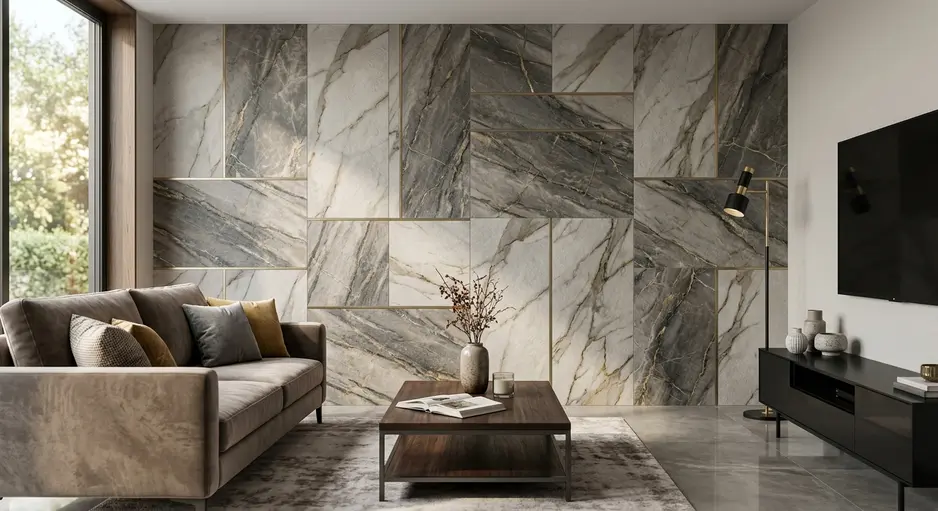
Luxury does not depend on price alone. It comes from the way scale, color, texture, grout, and lighting work together. A simple tile can look premium when the layout is balanced and the installation is precise.
Scale, Texture, and Visual Continuity
Large tiles create a clean surface with fewer grout lines. They also allow stone patterns and marble veins to flow across the wall. This can make a compact room feel wider and give a large room a calm, unified look.
Texture adds character, but it should be used with care. Accent wall tiles with ribs, waves, or relief patterns work best on one main surface. Too many bold finishes can make the room feel busy.
Why Installation Quality Matters
Even premium living room wall tiles can look poor when joints are uneven or patterns do not align. Substrate preparation and layout planning are vital, especially for large format porcelain tiles and bookmatch wall tiles.
Use an experienced installer who follows the product instructions and local requirements. Industry standards such as ISO 13006 and EN 14411 can help buyers understand tile classifications, while fixing requirements should be confirmed for the specific wall and product.
Top Trending Living Room Wall Tiles for Luxury Spaces
The latest wall tile trends for modern interiors favor natural patterns, warm colors, large surfaces, and tactile finishes. These directions have lasting appeal and can suit homes, hotel lounges, offices, and reception spaces.
Large-Format Porcelain Tiles
Large format living room wall tiles reduce the number of visible joints. They are ideal for double-height spaces, open-plan rooms, and wide entertainment walls. Stone, concrete, and marble patterns also look more realistic at a larger scale.
These tiles need a flat base, suitable adhesive, safe handling equipment, and skilled labor. Their weight and size should be checked before installation. Careful planning helps control lippage and keeps veins or patterns aligned.
Marble-Look and Bookmatched Surfaces
Marble look living room wall tiles bring formal elegance without requiring every wall to be covered in natural stone. Designs inspired by Calacatta, Statuario, Carrara, and darker marbles can suit both classic and modern rooms.
Bookmatched layouts place two matching surfaces together to create a mirrored vein pattern. This technique works well behind a sofa or on a tall feature wall. Keep nearby finishes simple so the main pattern remains the focus.
Warm Stone-Look Wall Tiles
Travertine, limestone, slate, and sandstone effects are becoming popular in relaxed luxury interiors. Ivory, beige, greige, taupe, and warm gray pair well with timber, soft fabrics, and muted metal details.
Stone look wall tiles can provide a more consistent surface than some natural materials. Porcelain options may also be easier to care for, though performance always depends on the selected product and installation system.
Fluted, Ribbed, and 3D Wall Tiles
Fluted lines, geometric reliefs, and wave patterns give walls a sculptural quality. Side lighting creates shadows across textured ceramic wall tiles, making the surface change throughout the day.
Use 3D wall tiles in selected areas, such as behind a sofa, beside a staircase, or around a display niche. They can collect more dust than flat tiles, so consider cleaning access before choosing a deep pattern.
Glossy Statement Tiles
Glossy wall tiles reflect daylight and artificial light. Polished ivory tiles can help a compact apartment feel brighter, while dark polished finishes can create a dramatic, formal setting.
Reflection needs careful planning near windows and television screens. High-shine surfaces may also show fingerprints and dust more easily. View a sample under the room’s actual lighting before making a decision.
Matte and Soft-Touch Finishes
Matte finish wall tiles support the “quiet luxury” look. They have a soft appearance and work well with warm neutrals, simple furniture, and natural materials. They are a strong choice for Japandi, organic-modern, and minimalist rooms.
Matte or satin finishes are also practical around televisions because they reduce glare. A modern TV wall can combine ribbed tiles, timber cabinetry, and warm concealed lighting for a layered yet calm effect.
Digital Glazed and Decorative Tiles
Digital glazed wall tiles can reproduce botanical forms, terrazzo effects, metal details, abstract art, and complex geometry. These decorative living room wall tiles help create a personal feature without adding separate artwork.
Bold patterns are most effective in controlled areas. For example, a villa may use bookmatched marble-effect porcelain behind the sofa, while a reading corner could feature a small geometric panel.
Ceramic or Porcelain: Which Is Best?
Both materials can produce beautiful modern living room wall tiles. The right choice depends on tile size, wall strength, design goals, installation needs, and budget.
Ceramic Living Room Wall Tiles
- Often lighter and easier to cut than dense porcelain
- Available in many colors, patterns, and textured designs
- Well suited to smaller decorative walls and accent areas
- Often more budget-friendly, depending on the finish
Ceramic living room wall tiles are useful when a project needs pattern or texture without a very large slab. Product weight and wall suitability must still be checked.
Porcelain Living Room Wall Tiles
- Dense material with strong dimensional consistency
- Offers realistic marble, stone, concrete, and metal effects
- Commonly available in large and rectified formats
- Suitable for expansive residential and commercial feature walls
Porcelain living room wall tiles are often chosen for seamless designs and large surfaces. However, they can be heavier and harder to cut. Large or heavy units may need added support based on the substrate, fixing method, and local rules.
Best Living Room Wall Tile Designs by Application
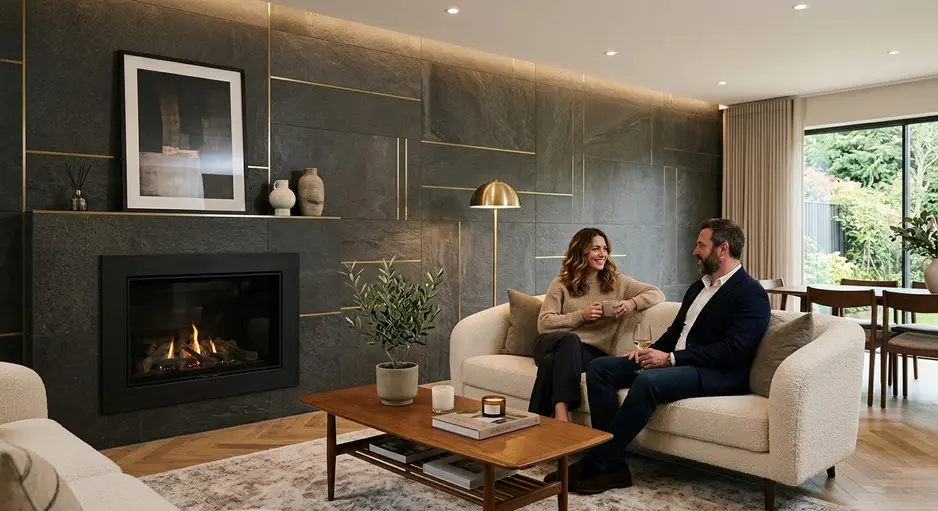
TV Unit Wall Tile Designs
TV unit wall tile designs should balance style with function. Matte marble, concrete looks, and shallow fluted surfaces can frame the screen without causing harsh glare. Plan brackets, power points, speakers, cable routes, and access panels before tiling.
Sofa-Back Accent Walls
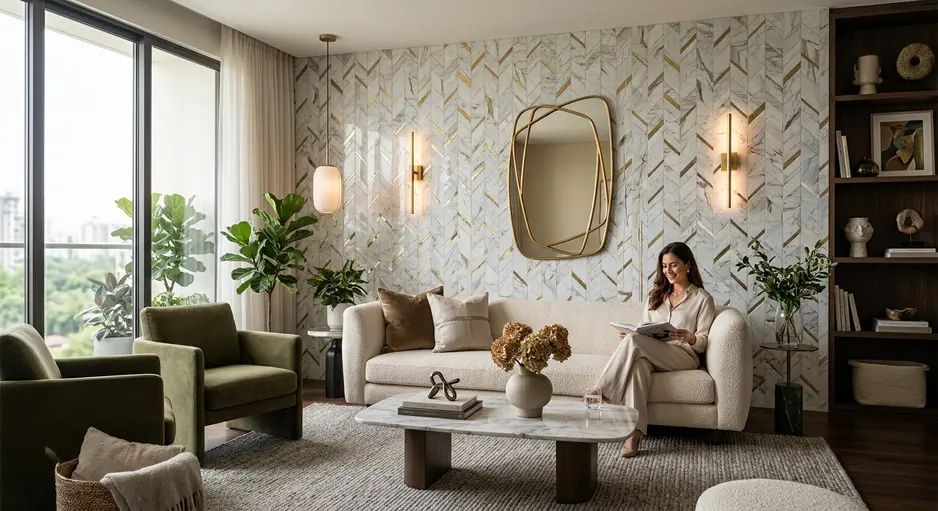
The wall behind a sofa is a natural place for luxury interior wall cladding. Try a bookmatched design, warm stone effect, or subtle 3D pattern. Align the tile layout with the sofa, artwork, ceiling details, and nearby lighting.
Double-Height Walls
Large porcelain surfaces emphasize vertical scale and keep tall walls from looking fragmented. Pattern continuity is important, as mistakes become more visible at height. Installation access, scaffolding, tile weight, and joint positions must be planned early.
Open Living and Dining Areas
One continuous wall finish can connect living and dining zones. Coordinate it with the floor rather than matching both surfaces exactly. A shared undertone creates harmony while a small contrast keeps the room from feeling flat.
Fireplace and Entertainment Walls
Do not assume every tile or adhesive is suitable near heat. Check documented heat resistance, substrate requirements, clearances, and local fire rules. The complete fixing system must be suitable for the planned fireplace or appliance.
How to Choose Living Room Wall Tiles
- Define the focal point. Decide whether the main tiled wall will sit behind the television, sofa, fireplace, or dining table.
- Match the scale to the room. Large rooms can support bold veins and oversized patterns. Smaller rooms often look better with light colors, gentle movement, and fewer visual breaks.
- Test samples under real lighting. Check each sample in daylight and under warm and cool lamps. Polished, matte, and textured finishes react to light in different ways.
- Coordinate nearby materials. Compare the tile with flooring, timber, curtains, furniture, and metal finishes. Avoid using several strong wood grains or marble veins in the same view.
- Review shade and pattern variation. Check available product information and inspect tiles from the planned batch. Dry-lay patterned pieces to avoid repeated motifs or unwanted clusters.
- Plan grout and edges. A close grout color creates a more continuous wall. Plan corners, trims, niches, cut edges, and wall endings before installation starts.
- Allow for cuts and breakage. Order extra material for cuts, matching, and future repairs. Ask the installer to confirm the amount, especially for diagonal, bookmatched, or complex layouts.
Living Room Wall Tiles vs Wallpaper
Durability and Cleaning
Tiles are long-lasting when installed correctly and are usually easy to wipe clean. Wallpaper can tear, peel, or stain, though its performance varies by type and room conditions.
Texture and Design Flexibility
Tiles create real depth through stone effects, grooves, and sculpted surfaces. Wallpaper offers a wide choice of printed designs and can be replaced more easily when styles change.
Installation and Cost
Wallpaper is generally faster to apply and often has a lower upfront cost. Tiles need skilled fixing and are harder to remove, but they offer a more architectural and substantial finish.
In the living room wall tiles vs wallpaper debate, neither option suits every project. A tiled television wall with wallpaper on adjacent surfaces can provide durability, warmth, and flexibility.
How to Source Premium Living Room Wall Tiles
Questions to Ask Before Ordering
- Which sizes, thicknesses, finishes, and edge types are available?
- Are the tiles rectified or non-rectified?
- What shade, caliber, and pattern variation should buyers expect?
- Which technical documents and test reports are available?
- What adhesive and installation method are recommended?
- Can samples be approved before placing a larger order?
- What are the packaging, lead-time, and replacement terms?
Checks for International Orders
Buyers seeking a living room wall tiles exporter worldwide or an international living room wall tile supplier should verify business documents and export capabilities directly. Ask about crate protection, container loading, shipping records, Incoterms, sample approval, quality checks, and the process for reporting transit damage.
Reviewing Lakshmi Ceramics
Visit the Lakshmi Ceramics website to review its current and verified product information. Before choosing a design, request available sizes, samples, technical specifications, batch details, lead times, and shipping support. Confirm any manufacturing or export services directly with the company rather than relying on general assumptions.
Top Trending Living Room Wall Tiles
Create a Luxury Wall That Lasts
The strongest current trends include large-format porcelain, marble effects, warm stone looks, sculpted textures, and restrained matte finishes. The best living room wall tile designs should also fit the room’s scale, lighting, furniture, and daily use.
Explore the verified collection on the Lakshmi Ceramics website, compare samples in your own space, and request specifications before making a final choice. Careful product selection and skilled installation will turn a feature wall into a lasting part of the interior.
Frequently Asked Questions
1. Which tiles are best for living room walls?
Porcelain works well for large-format, marble-effect, and stone-look designs. Ceramic is a good option for lighter decorative features and textured walls. The best choice also depends on the substrate, tile weight, room style, maintenance needs, and project budget.
2. Do large wall tiles make a living room look bigger?
Large tiles can make a wall look cleaner and more expansive because they create fewer grout lines. Light color, pattern direction, furniture scale, and room lighting also affect how spacious the living room feels.
3. Are glossy or matte tiles better for a TV wall?
Matte and satin tiles are usually better when screen glare is a concern. Glossy tiles can suit formal interiors, but reflections from windows and lights should be tested before installation.
4. Can floor tiles be installed on living room walls?
Some floor tiles can be fixed to walls, but their weight, size, substrate, adhesive, and support needs must be assessed. Follow the product instructions and have a qualified installer confirm that the wall and fixing system are suitable.
5. What colors make a living room look luxurious?
Ivory, warm white, greige, taupe, charcoal, deep green, and marble-inspired combinations can all feel luxurious. Good lighting and coordination with flooring, furniture, and metal details matter more than choosing one specific color.

Whatsapp Chatx
Hi! Click one of our representatives below to chat on WhatsApp or send us email to customercare@lakshmiceramics.in
 |
Customer Support +91 74488 10909 |